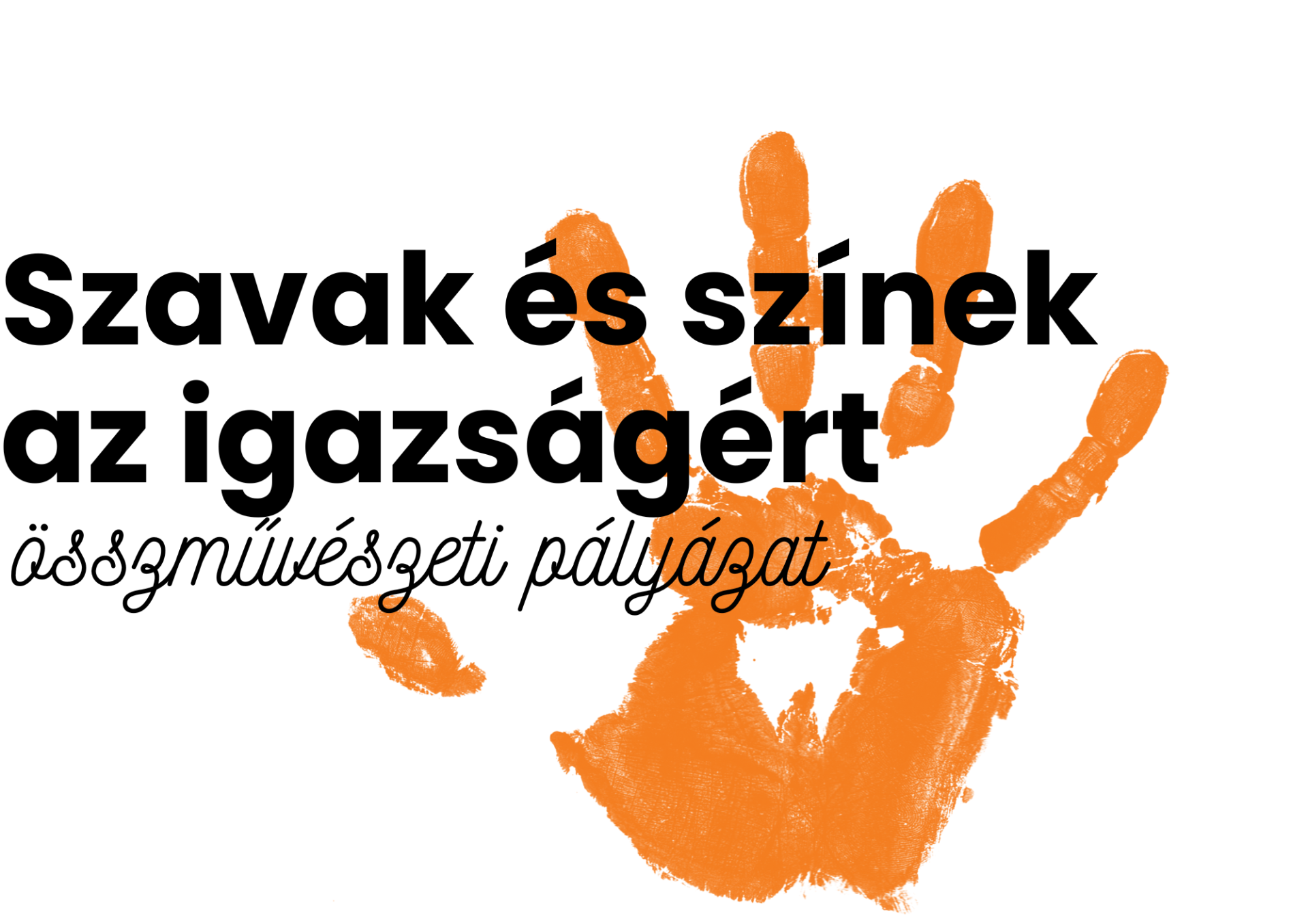
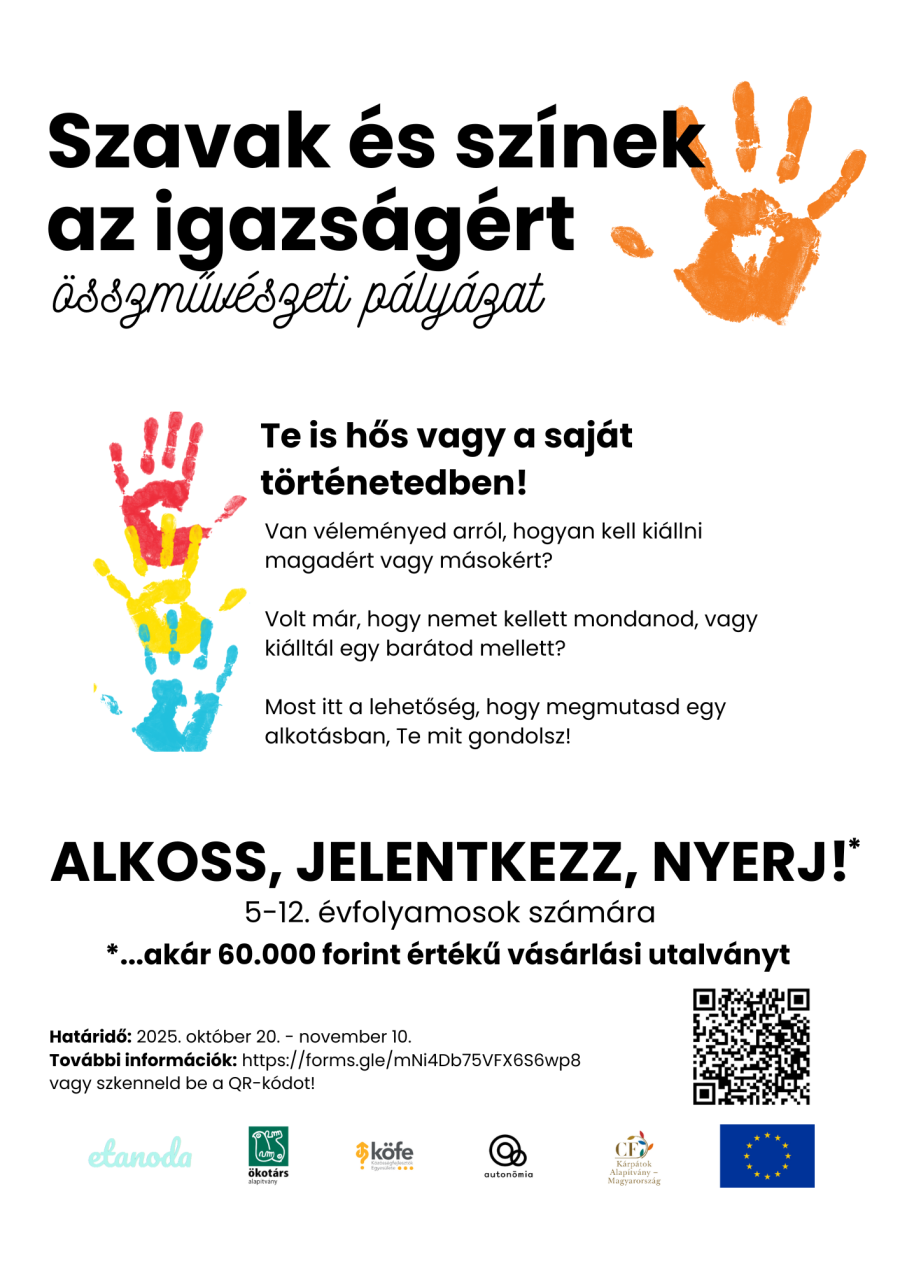
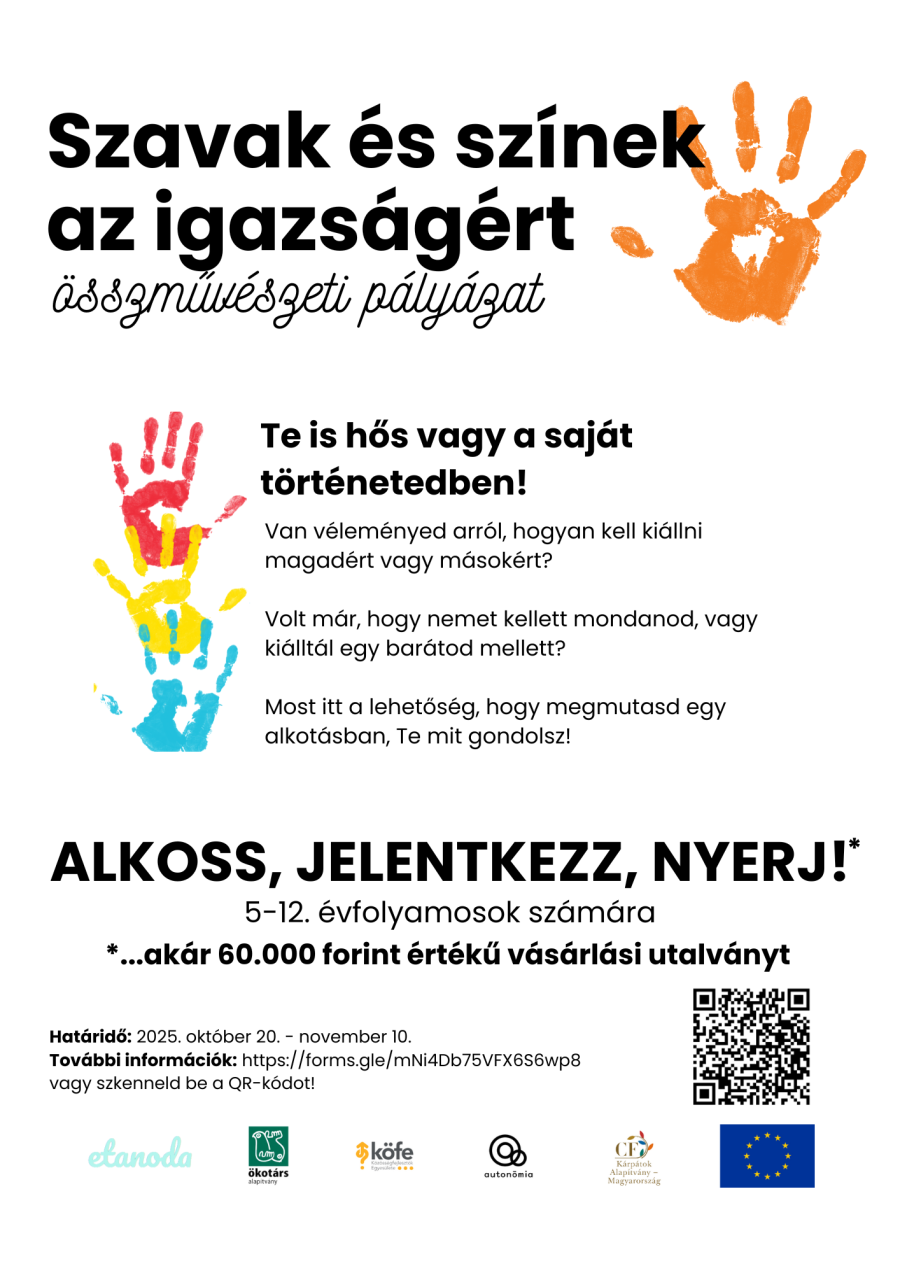
🎨 Words and Colors for Justice - Children’s Creative Competition 🎨
In October, E-tanoda launched its children’s rights–focused creative competition titled “Words and Colors for Justice”. The competition encourages students in grades 5-12 to express, through creative work, what it means to stand up for themselves and for others. At the heart of the call are self-advocacy, the prevention of bullying (teasing, harassment, exclusion), and standing up for others - issues that affect many students in everyday school life.
Students can apply in three different creative categories:
- 🎨 Create with colors and shapes - through drawings, paintings, photographs, graphics, collages, or comics;
- 📝 The power of words - by writing a short story, fairy tale, essay, or poem;
- 🎬 Thoughts in motion - by creating a song, short film, rap, slam poetry performance, dance, or TikTok video.
The aim of the competition is to give children the freedom to express their opinions in their own voices, while experiencing that important social issues can also be addressed through the tools of art.
The project is implemented within the framework of the “Our Shared Values” program, which provides E-tanoda with the opportunity to explore the topics of children’s rights and social awareness in multiple formats. Alongside the creative competition, for example, a new board game focusing on legal awareness is also being developed.
As part of the program, calls addressed to students, teachers, and parents have been prepared, schools have begun to receive information, and the first submissions have already arrived. The submission period runs from October 20 to November 10. The best works will be presented at an exhibition in Budapest at the end of November, where all applicants are warmly invited.
The top three outstanding creations will receive shopping vouchers worth a total of 120,000 HUF. At the same time, an important message is shared with every participant:
Everyone’s story matters! Whether you draw, write, make music, or express yourself in any other form, Your voice counts too.
This project is implemented with the support of the European Union’s “Citizens, Equality, Rights and Values” (CERV) programme. The support of the European Commission does not imply approval of the content of the activities carried out within the framework of the project, which reflects solely the views of the implementers, and the Commission cannot be held responsible for any use that may be made of the information contained therein.
