5 Things We Could Do Differently
When you read this, we’re already on our way home - our heads full of thoughts that have accumulated over the past two weeks. Thoughts about how...
- The image we have of the Finns is of a culture where people matter to each other, and where it’s important that everyone feels well in their surroundings;
- Helping those who are weaker or less fortunate isn’t a hobby—it’s a duty;
- No one can know better what I want than I do myself. And yet, I can trust others to know what’s best for them.
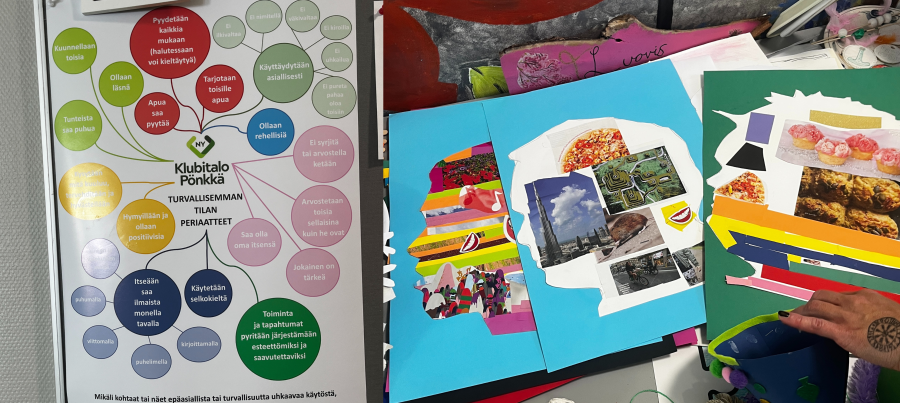
The Rules and Values of the Nuorten Ystavat Clubhouse - and a Vision Exercise (“How do I see myself in the future?” “What are my goals?”)
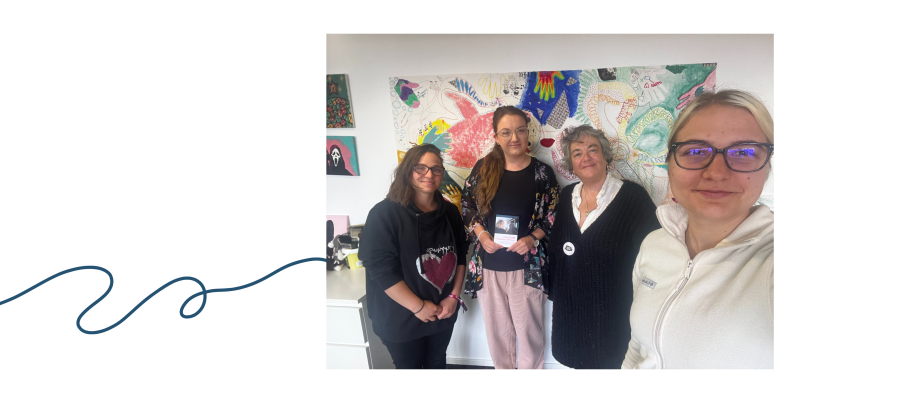
The coordinator and a mentor of the Deaconess Foundation’s Amigo Program
1. Being Present – Even Online
SOS Children’s Villages has developed chat-based support programs anyone can use to talk to trained volunteers - whether they’re in trouble or just need company and an understanding ear.
The Finns have shown that attentive listening and support don’t only happen in person - they can happen in the digital space, too. Since it’s harder to read nonverbal cues and gestures through a screen, it’s important to express them in words (it sounds obvious, doesn’t it?). “I’m here, take your time to write.” “I’m listening - write at your own pace.” “I’ve sat down on a bench, I’m focusing only on you right now.”
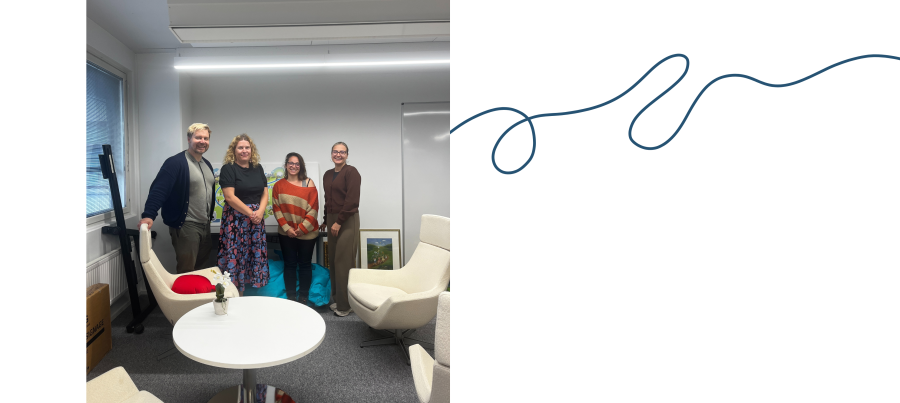
The staff of SOS Children’s Villages (SOS Lapsikylä)
2. Helping as Equals
The name Nuorten Ystavat means “Friends of the Youth,” but they offer support to people of all ages. They were founded 118 years ago to help children and their parents, and this remains one of their main services today through their “Parent’s Academy.” Now, they also run one of the international Clubhouses - community spaces for people living with mental health challenges or physical disabilities, centered on acceptance and equality.
In the Clubhouse model, there is no hierarchy between the helper and the helped. When we sit down to work together and make joint decisions, it not only builds confidence but also community - and gives purpose to those who may have lost it. This model has reduced hospitalization rates among participants by 75%. I’m curious - why do you think that is? Write back, and let’s discuss!
3. Sharing Knowledge, Not Keeping It
They participate in various Erasmus projects and offer free digital support to other Finnish NGOs - developing websites and providing software tools that help them work more efficiently and securely. They participate in various Erasmus projects and offer free digital support to other Finnish NGOs - developing websites and providing software tools that help them work more efficiently and securely.
Their trainings and volunteer programs all emphasize one thing: what we know, we should share. You don’t need to be an expert for your personal experience to empower someone else. Over time, the best approach is to give volunteers, helpers, or even students and mentees leadership tasks and roles - so that through practice, they become more confident and responsible. That’s what they do at United Vision too - to make everyone competent. And that’s how we grow as a society.
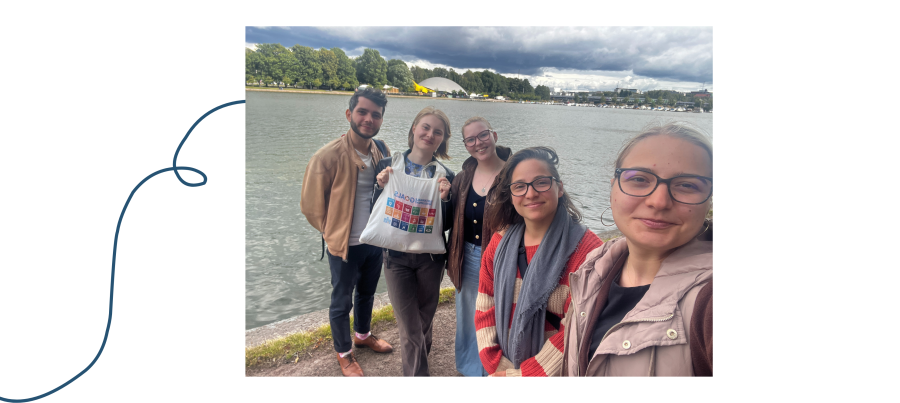
The volunteers and the secretary of the United Nations Youth of Finland
4. Caring for the Vulnerable
The Deaconess Foundation works for human dignity - which everyone deserves. Their shared office doubles as a community space open to anyone participating in their programs. In the Amigo Program, young people aged 16-29 are matched with an “Amigo.” The matching process is very thoughtful, taking into account many factors. An Amigo can be anyone - regardless of age, gender, or profession. The goal is to initiate conversations and help the young person open up. The uniqueness of the program lies in the fact that sometimes, the pairs never talk about their private lives or families during their meetings. In daily life, we’re often forced into roles - but within Amigo, we have the chance to rediscover ourselves beyond those roles.
In the Finnish mindset, it’s natural that members of society help those in more difficult situations - whether it’s through a warm meal, a conversation, or a small act of kindness. And often, the programs aren’t about money: taking a walk, having coffee, sitting together in a library - the point isn’t the activity itself, but the attention, care, and company.
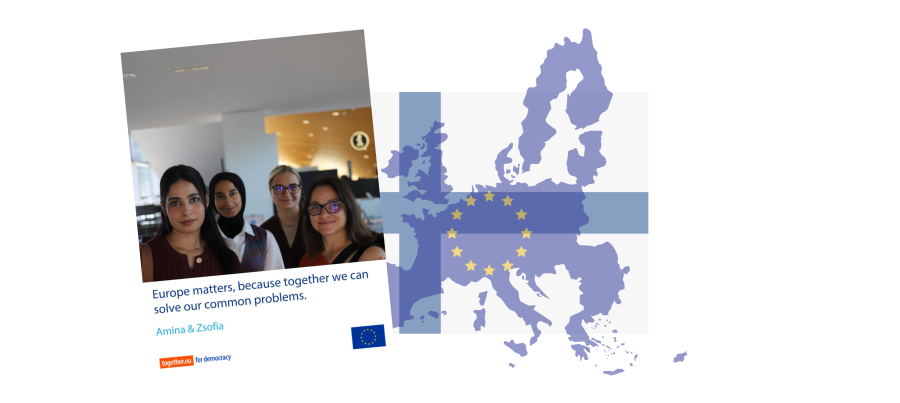
The members of the leadership of United Visions
5. Believing That Everyone Is Competent
Each person knows best what they need - and if we trust that, we can work together as equals, not from a position of authority.
Helpers have feelings, too. And it’s important to acknowledge them: no one is invulnerable, no one is made of steel. Naming our emotions helps us set boundaries and understand ourselves better. When things get tough, we too can ask for help - the helper isn’t untouchable. Just human. And equal.
This project is supported by the European Union’s “Citizens, Equality, Rights and Values” (CERV) program. The support of the European Commission does not constitute endorsement of the content, which reflects only the views of the authors. The Commission cannot be held responsible for any use of the information contained therein.
