
"He mentioned two key words, and I started playing 20 Questions to figure out what they might have been learning."
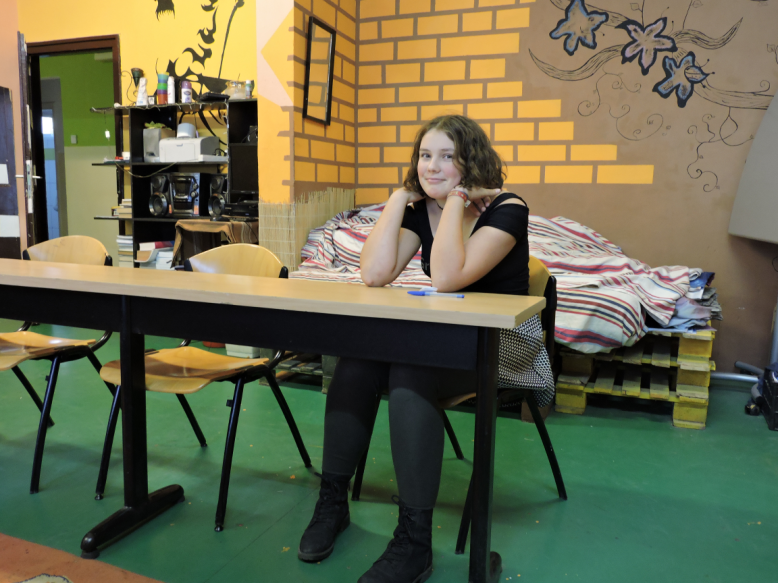
Our mentor Terka is in 9th grade, but she was with us in the E-tanoda program last year as well. She wrote about why teaching can sometimes be difficult and why it's still worth it. The article originally appeared in the school newspaper of Veres Péter High School in Békásmegyer.
I started volunteering last year. They didn’t even count the hours back then. Still, it was worth signing up for the E-tanoda program. This program allows us to mentor underprivileged children over the internet (specifically through a program similar to Skype, Microsoft Teams), helping them with their studies. What grabbed my attention the most was the teaching aspect. At least at first.
The semester-long program started with a camp in October where we got to meet the mentees (we mentor them, so we are the mentors, and they are the mentees). At first glance, they seemed like us. However, their manner of speaking, strangely direct behavior, and later observed habits were unfamiliar. It was as if they came from another country, world, or culture. Yet they live right next to us. Last year we might have said that Alsószentmárton is at the end of the world, but this year they came from a school in Csepel, which isn’t far away. They were both like us and yet different. There was a natural boundary between us that we were trying to cross.
We found our study partners ourselves. Last year, I didn’t have much success, but I still learned a lot from the program. I tutored a boy my age, Máté, in math. Every lesson conducted via video call followed a similar pattern. I started the session and then waited for about 20 minutes. (Later, I found out that this issue is common among them; it’s normal for them and different from us.) Then my mentee (Máté) would arrive, and I would ask what they were learning and what he didn’t understand. He mentioned two key words, and I started playing 20 Questions to figure out what they might have been learning and explained what he didn’t understand in a way he could grasp. It was especially challenging because if I asked, "Do you understand?" he would say yes, but when I asked him to solve a problem or something similar, he had no idea. Once, I explained the area of a square for 50 minutes, so there wasn’t much need for extensive knowledge. That’s why this year, I’m also helping a 6th-grade girl with English, even though I’m not very good at English. Maybe that’s why I took it on—because people learn best what they teach.
Of course, I gained a lot of experience through the difficulties. I want to be a teacher—I got to practice teaching, learned that sometimes I have to take charge even when I don’t want to, met new people, encountered new situations, and got to know the world a little better.
I gained a lot from the program, which could partly be established thanks to KÖSZi (this is what we call the school community service at VPG - editor). So, I would just say that I recommend everyone to apply, even those who don’t feel particularly strong in any subject, and thank you, KÖSZi!
The article originally appeared in the school newspaper of Veres Péter High School in Békásmegyer.