
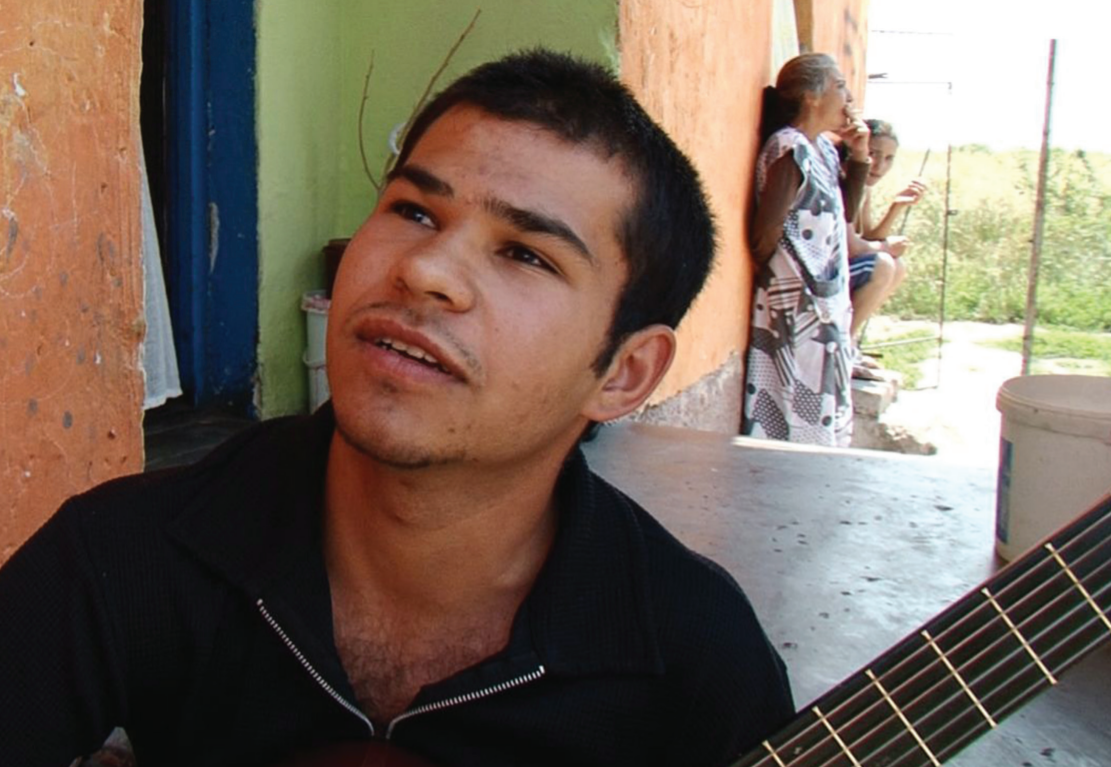
Tititá - "He Lost Faith in Whether He Even Wanted to Be a Musician"
A report on the film Tititá shown at the closing mentor meeting of the E-tanoda program.
Anti is a child from a Roma family living in deep poverty, who embarked on an opportunity without any support and was not mentally prepared for it. Suddenly, he was surrounded by one of the world’s most famous musicians and a host of professional musicians, and he quickly realized that he was significantly behind the others. He had been playing the guitar by ear until then, but now he had to learn to play from sheet music. Everything he had thought about music was overwritten by his new environment. Spontaneity and feelings were replaced by the need to learn awareness and technical forms.
Throughout the film, I often felt that Anti didn’t understand what was wrong with the way he did things. Why was it bad? He might have felt that he wasn’t getting convincing answers until he met a teacher who could make him understand, show him in his own language where the mistake was.
Until this meeting happened, I saw a gradual increase in defiance in Anti. His initial enthusiasm quickly waned. He wasn’t used to regularity and had to face the fact that he needed to practice constantly. He didn’t prepare for lessons, made excuses, and at one point even stopped attending the sessions, opting to sleep instead. He didn’t understand why he had to do certain things. He was alone. Far from his family, in an environment that was new and unfamiliar to him. His teachers handled this with patience for a while, but after some time, I noticed that this patience, and perhaps the trust in him, started to diminish.
Meanwhile, he felt terrible. He even lost faith in whether he wanted to be a musician at all, but fortunately, this was just a passing thought, and he quickly moved past it.
At the end of the first six-week course, he went home. There, another harsh reality awaited him. He recognized what kind of life he was actually living. Very harsh statements came from his mouth. "I don’t want to be among illiterates." He felt and saw how inadequate and non-developing the environment was where he had previously been happy.
At this point, I felt that Anti began to float. Floating between two worlds. The bright sparkle alongside Snétberger and the opportunity to perform at the Müpa, and his family living in deep poverty. It’s a huge responsibility to pull someone out of an environment like Anti’s and tempt them with a world for which they are not mentally prepared. What I missed in this story was the principle of gradualness. Perhaps Anti should have first attended a music school, maybe he should have been helped with this before going to such a camp. A music school where he could learn the basics, and in this camp, he would have been helped in truly developing his talent and learning the subtleties.
Anti had to struggle not only with himself but also with poverty. The next time, he went without his guitar. He reported how hard a winter he had to endure at home. The guitar became a victim of this. He needed 2200 forints for the train to participate in the selection and preparation, but his family didn’t have that much money.
During the film, I often felt that I could almost see his thoughts on his face, that I could speak them out for him. Anti’s story reminded me of a story in my own life. The only difference is that my problem wasn’t with my knowledge but with integrating into the community. It wasn’t the regularity and work that troubled me, but I didn’t have trust.
Everyone has their own limits and difficulties. For Anti, it was the technical knowledge; for someone else, it might be trust and faith in themselves. Anti has the talent, but he needs to develop his knowledge. I have the knowledge, but I need to develop my trust, so I dare and want to share it. I need to learn to believe in the goodness of people because I have met many bad people, and because of this, I closed myself off. For me, going into a community is just as big a challenge as it is for Anti to keep up with his fellow musicians, and like him, I fight my battles without my family’s support. Many of us have stories where we can relate to Anti’s.
Considering the end result, I think he overcame the obstacles very well. The selection went well. The camera captured the faces to see what emotions his music evoked in them. I saw all positive emotions. Many talented children were featured in the film, and it must have been difficult to choose among them, and Anti’s instability and floating didn’t favor the story. Surely, it was painful for him to experience that he couldn’t perform at the Müpa. But he gained a lot. He grew. He developed, and the path to development opened up for him. He gained a perspective he didn’t have before.
I sincerely wish that his dream comes true and he gets into the conservatory. Hopefully, he has the opportunity and strength to educate himself. I missed finding out what is happening with him NOW, where his life stands.
Magdi, E-tanoda mentor