
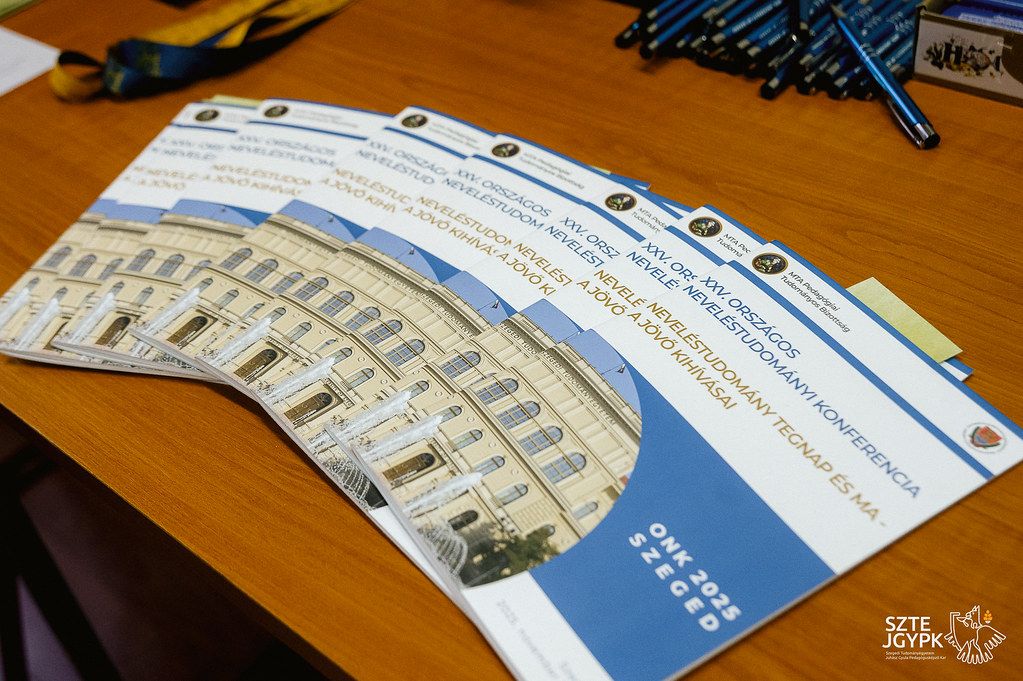
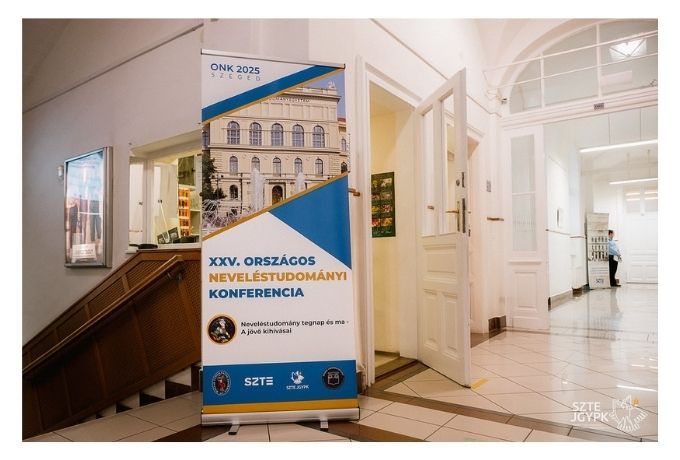
We Attended a Conference in Szeged This Fall!
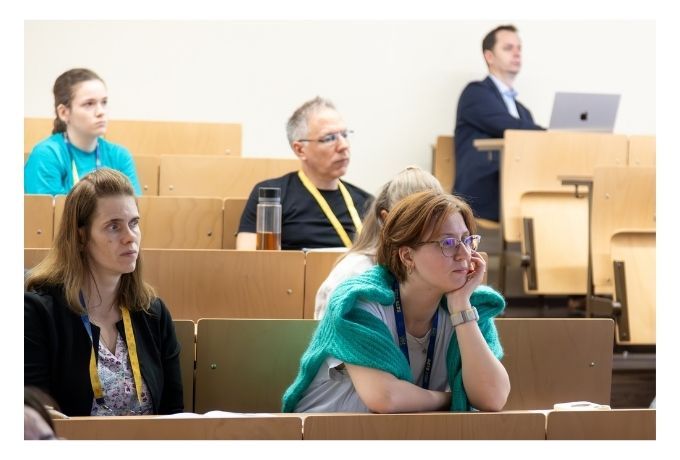
Representing E-Mentoring, Laura Lőkös, the Program Professional Project Assistant, participated in the XXV National Educational Science Conference, presenting in the session titled Inclusion, Social Awareness Raising, and Emotional Education on Friday, 14 October 2025, from 12:30–14:00. In the presentation Social Awareness Raising and Pedagogical Innovation with Digital Tools (by Lilla Judit Lukács and Laura Lőkös), Laura introduced E-Mentoring’s activities and related innovative methods. Below is a summary of Laura’s report and the key takeaways from the event.
Laura showcased how E-Mentoring works, emphasizing the role of peer mentoring. She highlighted how supportive relationships among young people significantly contribute to enhancing learning motivation and self-confidence. She also outlined the organization’s main goals, particularly creating a supportive community tailored to individual students’ needs while applying 21st-century pedagogical methods. Students involved in the program become more motivated to learn, expand their worldview, and view their opportunities from a broader perspective. The mentees’ academic results improve, their digital skills develop, and their self-confidence and assertiveness increase. All these factors also contribute to more thoughtful career orientation decisions (e.g., choosing high school instead of vocational school or faster development of language skills).
The program also provides valuable lessons for the mentors. They reported the greatest growth in communication, explanatory skills, time management, empathy, digital competencies, teaching abilities, and social sensitivity.
During the conference, the Romoji game was also presented. Romoji is a narrative adventure game, freely available on Google Play. The game focuses on the everyday life of Roma communities through the friendship of three children in Hungary and Slovakia. Developed as part of an Erasmus+ K2 project, the game’s authenticity was grounded in life-course interviews and research. The game is set in the fictional town of Határzúg and unfolds through player choices. At the end, superheroes inspired by Roma mythology provide feedback, showing the motivations with which each player completed the game. Romoji aims to promote positive Roma representation, raise social awareness, and increase empathy. The game has won the Best Roma Youth Award (1st place) and the OTP Fáy Foundation Educational Innovation Award (High School category, Gold).
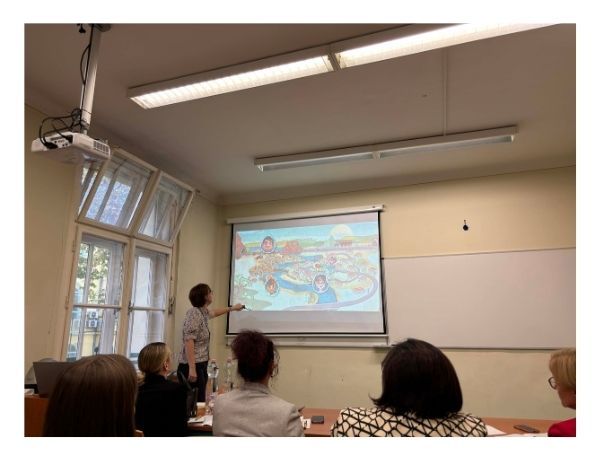
In summary, the experiences and feedback from the conference reinforced for the E-Mentoring team that they are doing essential, impactful work every day. The presentation drew great interest from participants, with the Romoji game being a central focus alongside the mentor program. Several attendees even downloaded the game on-site.
The abstract of the presentation is available in the conference proceedings, which can be downloaded here.